
San Francisco and Marin CA
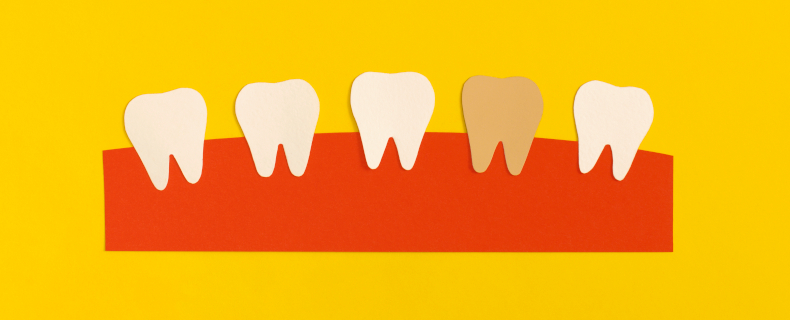
Tooth discoloration usually affects the entire smile and is commonly treated with professional teeth whitening. However, in some cases, only one tooth becomes darker than the surrounding teeth. When this happens, whitening alone is often not the right solution.
A single dark tooth can signal anything from surface staining to internal damage. Understanding the cause is the key to choosing the correct treatment. Below are the most common reasons one tooth may darken—and how cosmetic dentistry can restore a natural, healthy appearance.
Uneven or Localized Staining
Although surface stains often affect all teeth evenly, certain habits can cause discoloration in specific areas of the mouth. Smoking is a common example, as smoke may repeatedly contact the same teeth. Similarly, sipping coffee, tea, or dark beverages can lead to staining on one or two front teeth more than others.
The good news is that external stains typically respond well to professional teeth whitening. Even if over-the-counter whitening products haven’t worked, dentist-supervised whitening treatments are often strong enough to lift stubborn stains and even out your smile.
Old Metal (Amalgam) Fillings
Metal amalgam fillings may darken over time as they tarnish or corrode. While the filling itself may not always be visible, the metal can discolor the surrounding tooth structure, making the entire tooth appear gray or black.
Replacing the old filling is usually necessary, but it won’t reverse the discoloration on its own. To fully restore the appearance of the tooth, cosmetic solutions such as porcelain crowns or veneers are often recommended to cover the darkened tooth and blend seamlessly with your natural smile.
Tooth Trauma or Injury
An injury to a tooth—whether from a fall, sports accident, or biting down too hard—can cause it to darken over time. This happens when the inner pulp of the tooth is damaged.
In mild cases, the tooth may be temporarily bruised. The pulp can heal, and the tooth may gradually return to its normal color, though this process can take months and doesn’t always fully reverse.
If the trauma is more severe and the pulp has died, the tooth will not lighten on its own. In these cases, root canal therapy is required to remove the damaged tissue, followed by placement of a dental crown to restore strength, function, and natural appearance.
Tooth Decay
Cavities often begin as chalky white spots but darken as decay progresses. Early decay may only affect a small area, but advanced decay can cause the entire tooth to appear darker than neighboring teeth.
If decay reaches the tooth’s pulp, bacteria can cause infection, leading to pain and potential tooth death. Treatment typically involves root canal therapy to eliminate infection, followed by a crown to protect the tooth and restore its appearance.
Identifying the Cause of a Dark Tooth
Because a dark tooth can have multiple causes, a professional dental evaluation is essential. Once the underlying issue is identified, the appropriate cosmetic or restorative treatment can be recommended to restore both health and appearance.
Creating a single natural-looking tooth that perfectly matches the rest of your smile is one of the greatest challenges in cosmetic dentistry—but with the right expertise and materials, it is absolutely achievable.
Restore a Dark Tooth at Glen Park Dental in San Francisco
If one of your teeth has turned dark, you don’t have to live with it. At Glen Park Dental, we offer advanced cosmetic and restorative dentistry solutions designed to precisely match your natural smile.
Call Glen Park Dental at (415) 799-3900
San Francisco, CA
Schedule your consultation today and learn how we can restore the beauty and balance of your smile.